
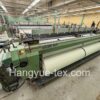
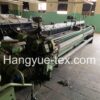
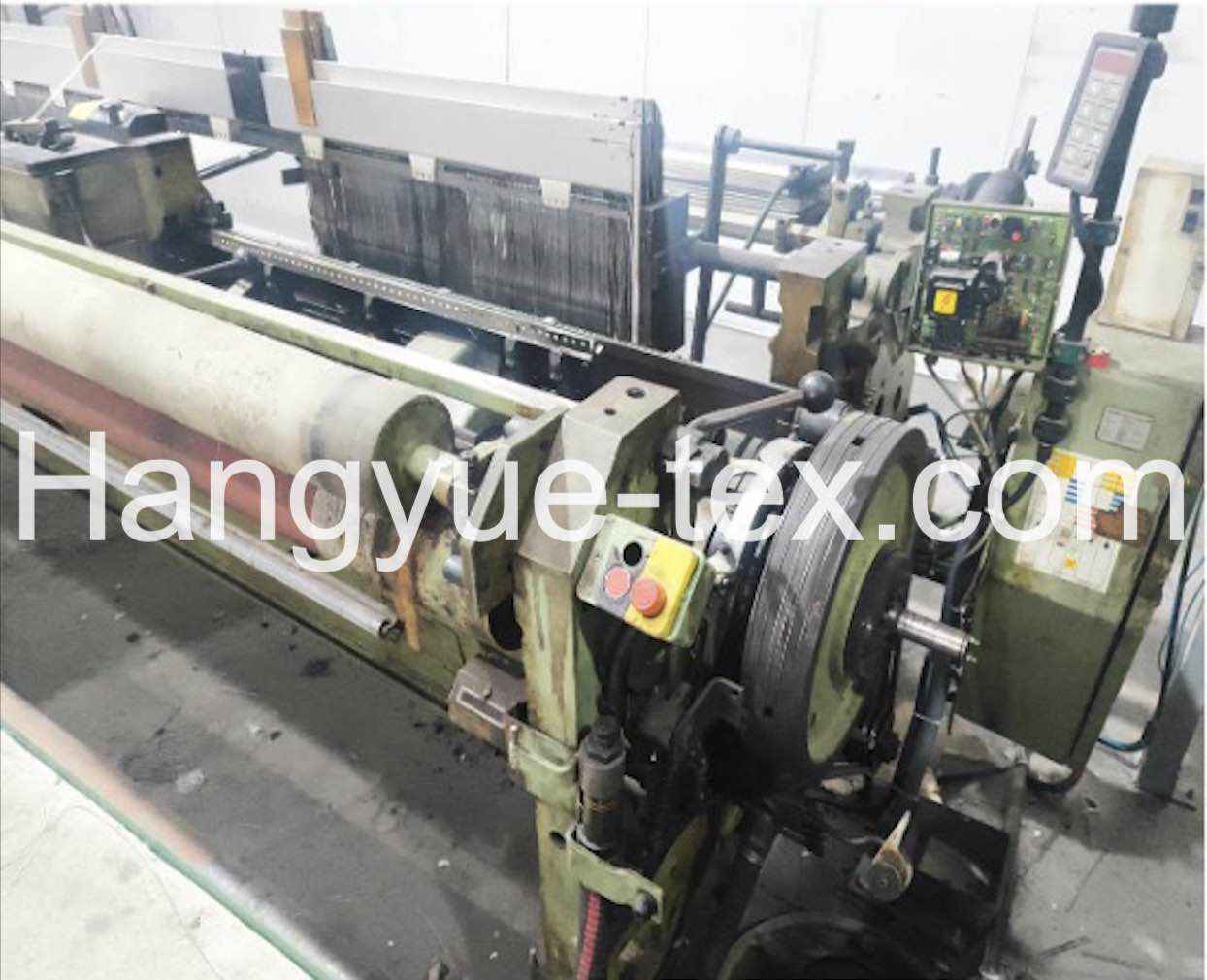
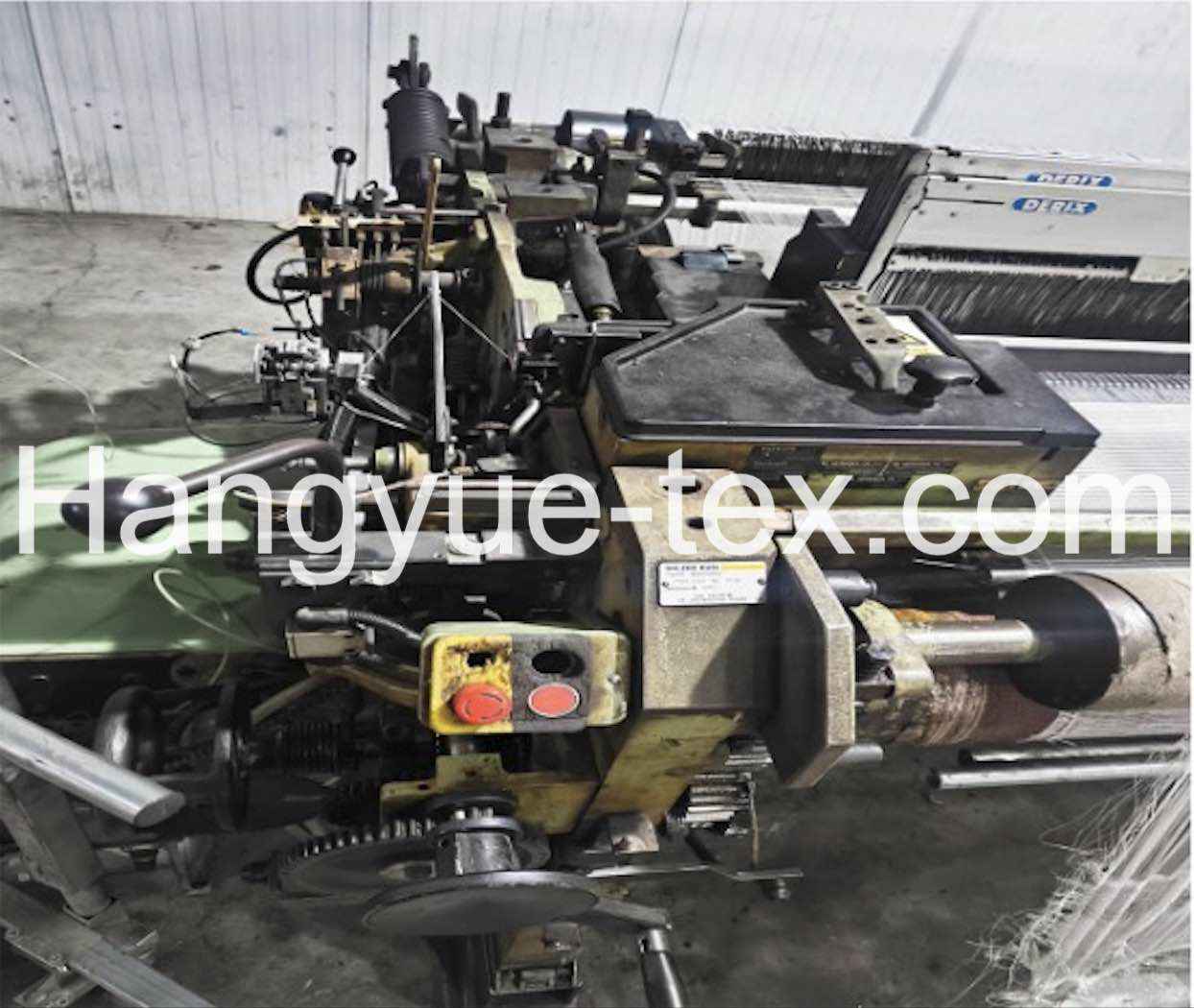
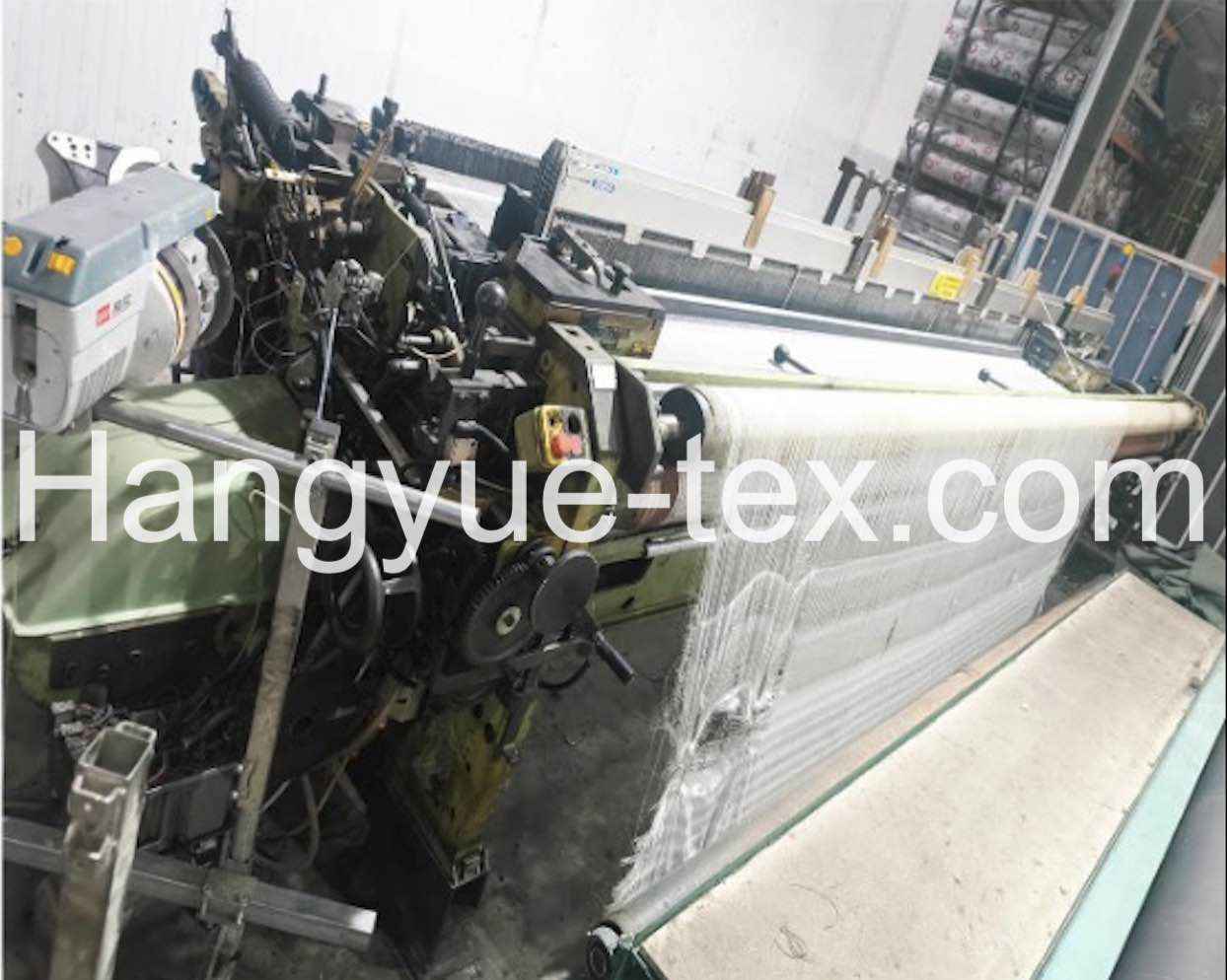
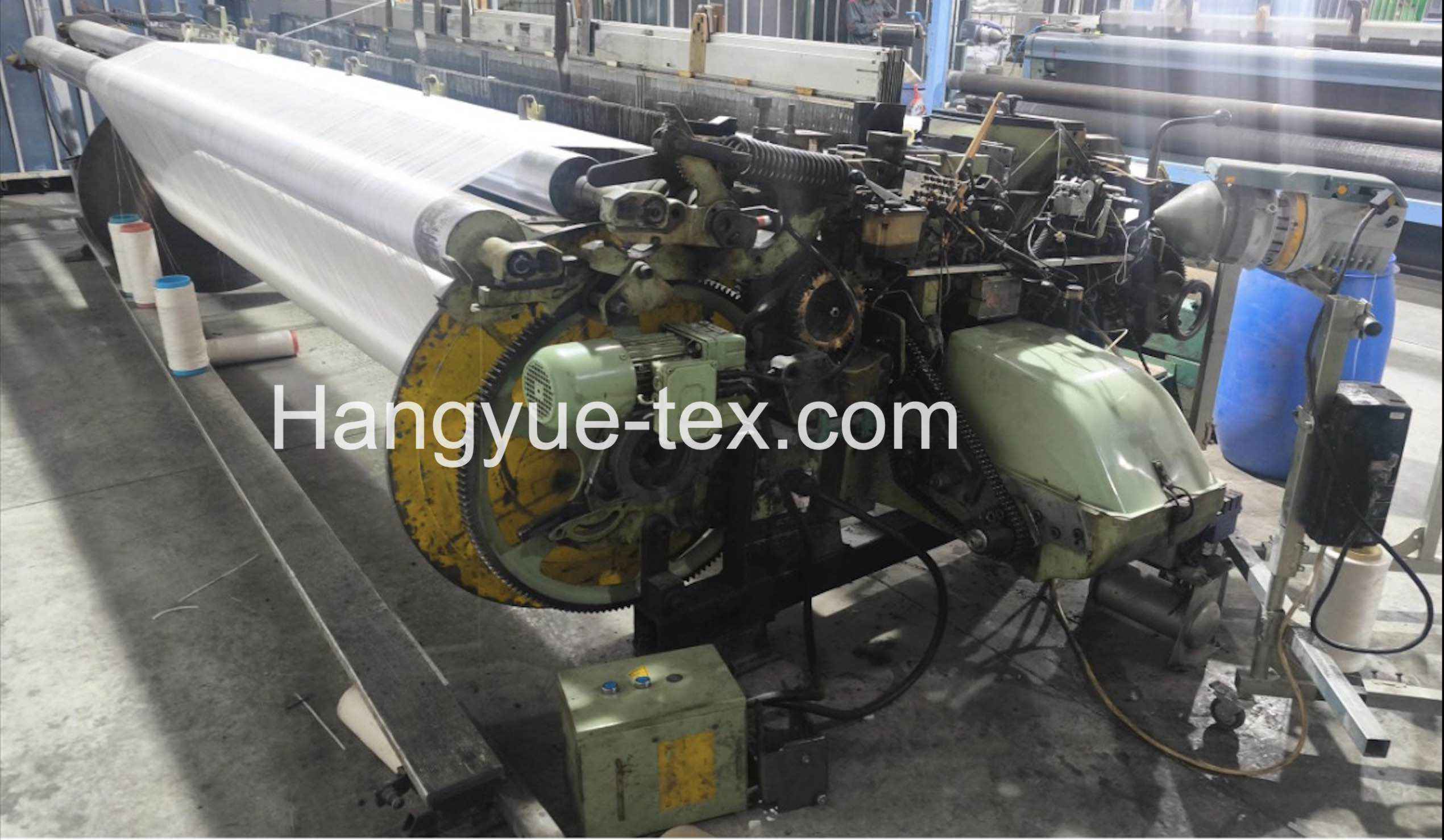
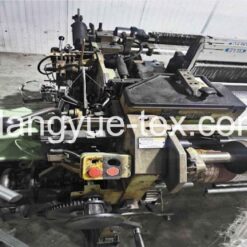
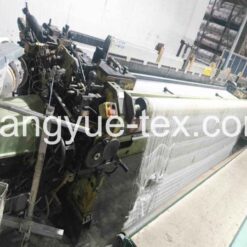
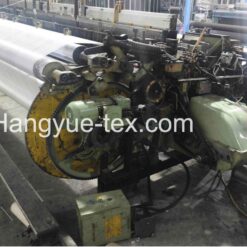
2 Sets Sets SULZER P7100 Projectile Looms Working Width 460cm / 181” Year–1997
$25,999.00
Model: SULZER P7100 Projectile Loom
Year: 1997
Working Width: 460 cm / 181”
Weft Insertion: Projectile
Configuration: Subject to nameplate & actual machine setup (colors / shedding / dobby or cam, etc.)
Condition: Used (subject to inspection)
Machine status : 1 Running an other one is stopped
Location: On Request
Ready for Export: Yes
Post Date: 05 Jan 2026
Price Includes Dismantling, Packing & Shipping
2 in stock
The Sulzer P7100 Projectile Loom (1997) is a versatile and heavy-duty weaving solution designed for large-scale textile production. This specific machine offers an expansive working width of 460 cm (181 inches), making it ideal for manufacturing wide fabrics with consistent quality. Built in 1997, the P7100 model remains a staple in the industry due to its reliable projectile weft insertion technology, which ensures high precision and longevity even under rigorous operating conditions.
This used unit is available as a single set, with its internal configuration—including shedding motions, color options, and dobby or cam setups—dependent on the original nameplate and current machine environment. The machine is presented in used condition and is subject to detailed inspection to confirm its operational status. Currently available for inquiry, this SULZER loom is ready for logistical coordination and global export to meet your mill’s specific weaving requirements.
In a long weaving hall where the air always carried a faint, clean smell of oil and cotton dust, the Sulzer P7100 had a reputation that arrived before the machine itself.
People did not talk about it the way they talked about newer looms, with screens and flashy marketing names. They spoke about it the way mechanics talk about a reliable engine: it does the job, it holds the line, and it keeps running when a fabric gets difficult.
This one was a projectile loom, the “shiftless” kind. Instead of pushing air through a reed or firing a jet of water, it worked with something that sounded almost old-fashioned but was brutally effective: a small metal projectile that gripped the weft, shot across the open shed, and then returned to be used again. The motion was precise and repetitive, a controlled cycle of acceleration, catching, release, and return. The projectiles did not need drama to cross the width; they needed consistency. And that consistency is what made the P7100 a name that never really left the market.
When someone said “P7100,” they rarely meant a single fixed specification. They meant a family of machines, built in executions that could be tuned for different kinds of work. The letters and numbers that followed the model name mattered because they told the real story.
A code like P7100 P460 carried a kind of quiet authority. It meant the loom was built for a wide working width—460 centimeters, about 181 inches—an expanse of fabric that looked almost like a moving wall when it was running. In the used machinery world, those width codes appeared over and over: B360, B390, P430, P460, P540—each one a clue about what the loom was designed to handle.
Then there were the other details that looked cryptic to outsiders but read like a resume to a technician. N1, N2, N4—often pointing to how many colors or weft options the loom could manage. D1, D2, D12—projectile types or execution choices that sellers loved to list because buyers asked. Sometimes the offers mentioned reinforced executions, the kind people wanted when they were thinking about heavier fabrics. Sometimes you saw cam motion described in practical terms—levers installed, cams fitted, simple and dependable. Other times you saw Staubli dobby setups, where a wide P7100 could handle more complex patterns without losing the strength that projectile weaving was known for.
And then, among those listings and offers, the year 1997 appeared like a timestamp on a well-kept machine. Not a museum piece—still within that window where parts, knowledge, and demand remain strong. There were public offers showing P7100 units from 1997, proof that the series was still being built and traded in that period. A loom from that year did not promise perfection, but it promised a certain era of manufacturing: heavy frames, practical engineering, and a design meant to be serviced instead of replaced.
If you stood near one running, you could see why people still valued it. The rhythm was different from modern jet looms—less of a hiss, more of a firm mechanical cadence. Sellers often quoted speeds in the 300 to 330 rpm range depending on width and setup, sometimes higher in general claims, but everyone who really knew these machines understood the unspoken rule: speed was never a single number. Speed was the result of width, fabric style, shedding motion, yarn type, and condition. A wide loom running a demanding fabric was not judged by how fast it could be pushed, but by how steadily it could hold quality without breaking its rhythm.
The 460-centimeter machines, especially, carried the feeling of purpose. Listings described them with the kind of detail that only exists when people have negotiated these looms a hundred times: warp stop motion bars, take-up roller diameters, pressure roller sizes, harness frames included, weft accumulators lined up with a spool truck ready beside them. Some were fitted with electronic let-off and monitoring systems, others kept more mechanical simplicity. Many mentioned tuck-in selvedges—small details that mattered because they affected the final fabric edge and the buyer’s setup costs.
In the end, that was the true story of the Sulzer P7100: it was never just “a loom.” It was a platform, a wide and sturdy frame that could be configured for the mill’s reality. It might have been preparing polypropylene tape fabric one day, then moving into another technical weave the next, depending on what accessories and motions were fitted.
And when someone today says, “Sulzer P7100, working width 460 cm, year 1997,” it lands like a complete sentence even if it is missing details—because everyone in the trade understands what sits behind it: a machine built for width, for stability, for long runs, and for the kind of steady production that does not need to impress anyone, only to deliver fabric without excuses.
That is how these looms survive decades. Not by being the newest, but by being the ones people still trust to run.
Be the first to review “2 Sets Sets SULZER P7100 Projectile Looms Working Width 460cm / 181” Year–1997”
Join the Discussion
You must be a verified subscriber to drop a comment or ask a question about this machine. Sign in securely with Google to participate.
Login to Drop Your CommentRelated products
Open-End & Ring Spinning
Auto Cone Spare Parts
Murata Plate Belt Guide Part No. 21A-878-006 OF for Autoconer 21C
Comments
Be the first to drop a comment.